
The NileView
Remembering My Father: A Remarkable Gentleman from a Different Time

My father, Hussein Kamel, was born in Cairo in 1913, during the reign of Khedive Abbas Helmi II Pasha (1892-1914). It was the tail end of La Belle Époque in Egypt, when Cairo flourished with cosmopolitan culture, architecture, and social life. The city had a distinct vibe, blending Egyptian flavor with Ottoman heritage and European influence. This was a different world, a different era. The British Empire controlled a quarter of the globe, and the Ottoman Empire was nearing its final chapter. Egypt was part of the Ottoman Empire until it sided with the Central Powers in World War I. Consequently, Great Britain declared Egypt a protectorate, ending its formal ties to the Ottoman Empire in December 1914. Days later, Sultan Hussein Kamel began his reign as ruler of Egypt (1914-1917)–no connection to my family.
My father’s family originally came from Trabzon on the Black Sea, a family of diplomats, lawyers, and civil servants. My grandfather, Mohamed Ali Kamel Bey (1870-1955), was a lawyer, educator, entrepreneur, publisher, and poet. Together with my grandmother, he had six children; my father was the second youngest. My father’s grandfather, Hassan Abdel Karim, served as chief engineer in the Royal Court of Khedive Ismail Pasha (1830–1895), one of Egypt’s most transformative rulers and the architect of Egypt’s Belle Époque.
Born in the early 20th century, my father stood at the crossroads of two distinct eras in Egypt and the world. He adapted to changes in society and in his life with calmness and contentment, always pragmatic and often nostalgic. A product of a bygone generation, he embodied its finest qualities—an enduring example of the best of his time.
My father attended El-Ibrahimeya School (named after Ibrahim Pasha, who briefly ruled Egypt in 1848). He then joined the Egyptian University (now Cairo University) and graduated in 1938 with a Bachelor of Science in Agriculture. Early in his career, he worked in various roles, including as an agricultural engineer at the Ministry of Public Works, but he was never satisfied. Ten years later, he made the bold decision to shift careers and study sociology, graduating in 1948 with a Bachelor of Science in Social Work from the Higher Institute of Social Work. He traveled to the United States to pursue his master’s degree, graduating in 1952 with a Master of Science in Social Work from Columbia University. The university president, Dwight D. Eisenhower, delivered the commencement address and formally conferred degrees. My father was nearly finished with his doctoral work and about to begin his dissertation when he received a letter from my uncle saying that my grandfather was not well. Soon after, he took a 17-day boat journey from New York to Alexandria to be with his father and never returned to complete his doctoral degree. There were no regrets–for him, family was always first.
My father and I have birthdays exactly one week apart with a 52-year gap. With such an age difference–a span that might have been expected to create distance, setting us on disjointed trajectories defined by different generations, vocabularies, fashions, and assumptions– that gap became the foundation of a unique father-son relationship; it was the axis around which our relationship rotated. The age difference was never an obstacle to closeness. His maturity offered me a vantage point. We were close, not despite that gap but because of the qualities he brought to it: a cultivated intellectual, a refined thought leader, culturally astute, athletically spirited, and unwaveringly devoted to his family.
I have always sought more connections with my father. Growing up, I wanted to be a diplomat like him. In fact, I joined the Faculty of Economics and Political Science at Cairo University to study political science, seeing it as a gateway to the foreign service. However, as often happens in life, one plans one thing, and life takes you in a different direction.
My father was a diplomat and civil servant, known for his commitment to international cooperation, labor issues, and development policy to improve lives and livelihoods in developing nations, particularly in Africa and the Arab world. He began his career with the Government of Egypt (1939-1966), serving in various roles across organizations and at international posts in public works, labor, and social affairs. He represented Egypt at conferences and forums and helped shape global social, development, and economic policies. He served as Director of the International Labor Office (ILO) in Cairo (1966-1971), focusing on labor rights and standards, social justice and protection, employment policies, and capacity building. He then moved to the United Nations Development Programme (UNDP) as Resident Representative to the People’s Democratic Republic of Yemen in Aden (1971-1973), focusing on technical cooperation and development strategy initiatives to alleviate poverty, enhance human development, strengthen governance, and support economic planning.
My father lived an accomplished life shaped by diplomacy, responsibility, and service. His mindset was cosmopolitan and expansively inclusive. His career took him across borders, languages, and cultures. He traveled the world and held long, multiple assignments for the Government of Egypt and the United Nations in the United States, Switzerland, and South Yemen. He spoke English, French, and classical Arabic with the nonchalant fluency of someone who had learned to move fluidly across cultures.
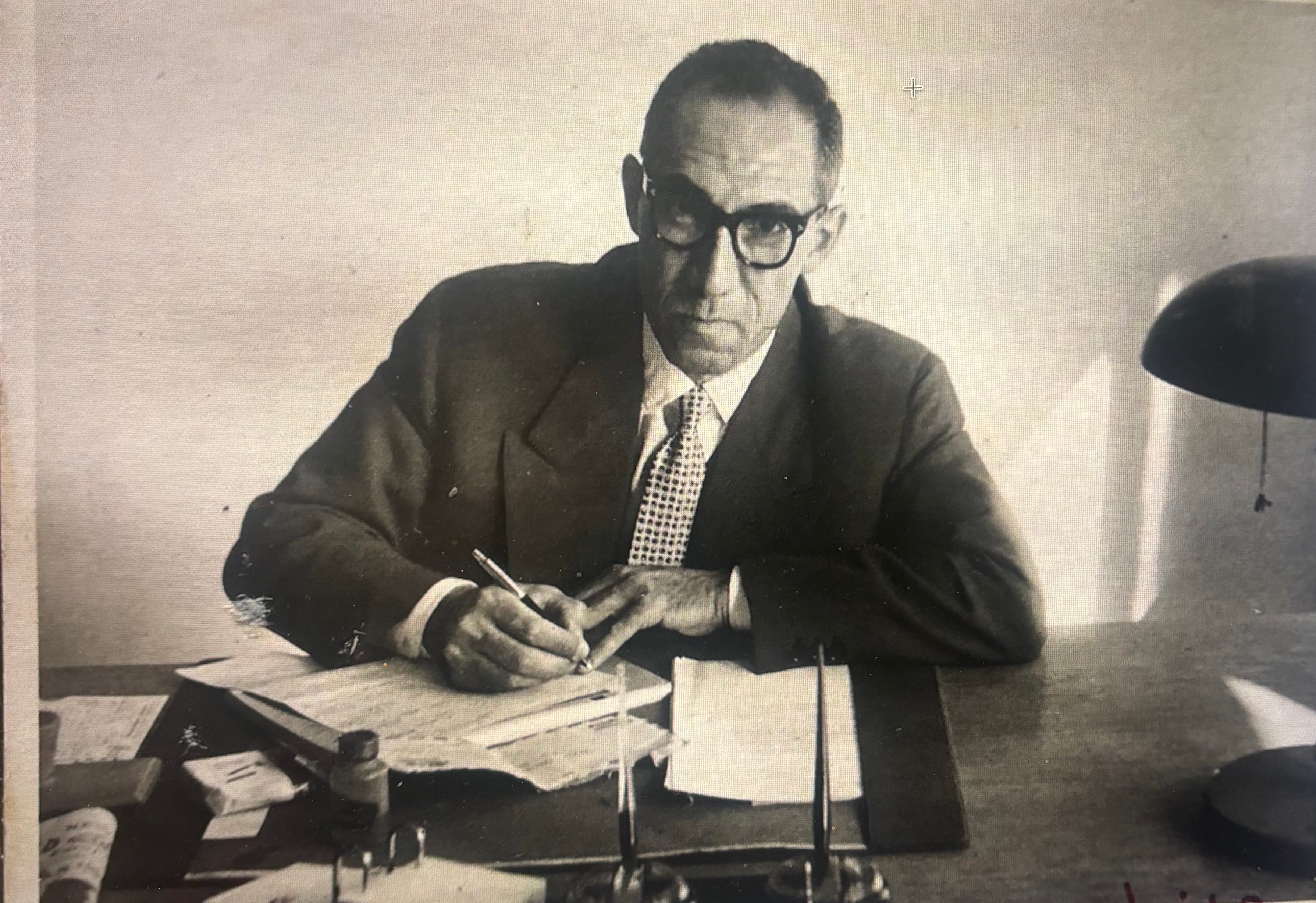
Throughout his career, my father focused on human capital, social development, international cooperation, and policy advocacy to improve society. Ironically, my entire career, one way or another, has focused on human capital as the most important asset and the key building block of any nation’s development journey, helping transform lives and livelihoods through awareness, capacity building, education, lifelong learning, and institutional strengthening to impact society.
I never felt the age gap with my father, even though the numbers insisted otherwise. From my earliest memories, he was always there, present, attentive, and caring. Time seemed to behave differently around him. Given the age difference, I was truly blessed to have him in my life for nearly 46 years. In that time, he was not just my father; he was my mentor, friend, lifelong supporter, and closest companion. His greatest gift was not longevity but engagement and impact. He enjoyed a healthy, active life, surrounded by my mother, brothers, sisters-in-law, my nephews and niece, and his entire extended family; he was fortunate to see his two grandchildren for twenty years.
Throughout my life, I made it a priority to spend as much time as possible with my father. Early on, I realized that nothing should be taken for granted. For more than twenty-one years—ever since I married in 1989 and moved to my own home until his passing in 2011—I was determined to see him every day, no matter how busy I was with work or personal commitments. Whenever I was in Cairo, there was hardly a day I did not stop by to sit with him, often for an hour or two. I always cherished the time we spent together and the endless conversations we had over the years about history, culture, and sports, but mostly about Egypt and the social, economic, and political transformations from the 1930s through the early years of the 21st century. These discussions were truly insightful, helping me better understand Egypt through the eyes of a veteran diplomat and longtime civil servant. In those moments, I learned that wisdom does not need to announce itself; it simply sits with you.
My father filled the room without demanding attention. His presence was calm, steady, and reassuring. He touched the lives of many people who trusted him instinctively, whether colleagues asked work-related questions, friends shared personal experiences, or family members sought advice. He carried knowledge lightly, not as a display but as a tool for understanding and connection. Humor followed him everywhere–gentle, intelligent, and perfectly timed. He could ease tension with a single remark, often delivered with a smile that suggested he understood far more than he let on.
Since I was little, his approach to fatherhood was never about commanding. He was a good listener, which in itself was a form of diplomacy—an attentive art honed over a lifetime. As a diplomat, he had learned the power of patience and how to let silence stretch until someone offered the true kernel of thought. One of his greatest gifts was his exceptional storytelling. Intellectually, he was tireless. His mind was not merely stocked with facts but wired for inquiry. He was an avid reader of history, philosophy, art, politics, and poetry. Through his home library, he taught me to read as a way to understand people, cultures, and the world.
My father pursued sports from a young age with the disciplined enthusiasm of someone who respected limits and tested them kindly. He excelled in gymnastics, became a national champion in the 1920s and 1930s, and was scheduled to compete in the 1936 Olympics in Berlin, but, for personal and other reasons, he regretfully could not attend. His love for sports stayed with him until the end. Even when he could no longer take his usual walks, he walked for 45 minutes daily in his flat, going back and forth in a limited space. For him, it was a mindset, a passion; for me, it was a lesson in resilience and humility.
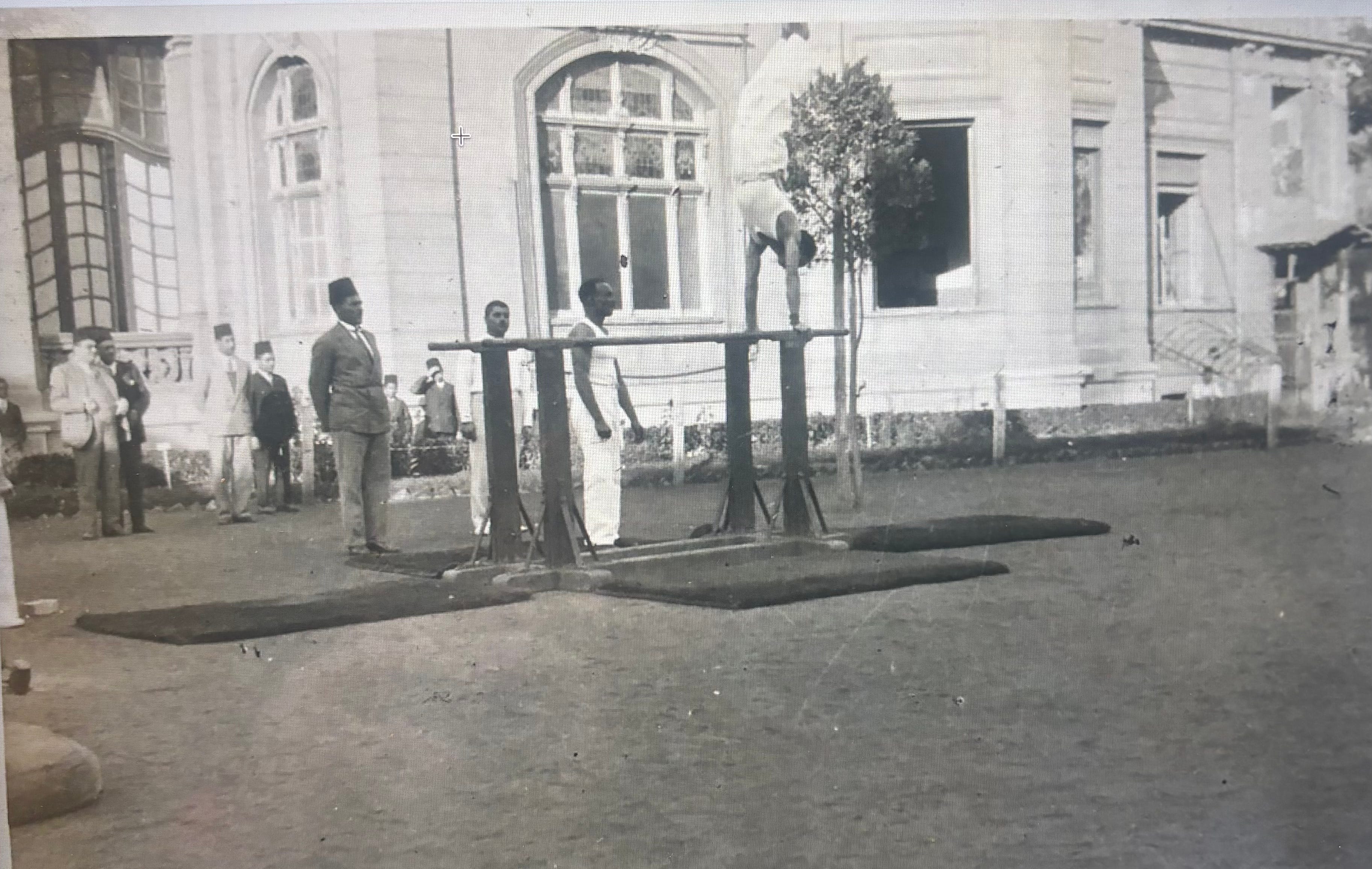
Kindness was his character; it was not sentimental but rather principled. He had the reflexive decency of someone raised in a household where respect for others was nonnegotiable. He believed that how you treat people reveals the deepest architecture of a person’s moral life. He was organized and disciplined in everything he did, and a set of habits governed his daily schedule, yet he was flexible enough to adapt when needed. After retirement, he read the papers every morning in the same spot on the balcony. This was followed by a cup of coffee and cigars, either at home while reading in the living room or with friends on Saturdays and Mondays at the Gezira Sporting Club. My father had many acquaintances from various walks of life, and a few close lifelong friends who were very important to him; the club was one of their meeting places. Lunch was served at home at 13:30, followed by a nap. The late afternoons, which often unfolded quietly, were reserved for rare outings, reading, welcoming visitors, holding conversations that drifted effortlessly from the global to the personal, and sharing memories spanning many decades. Evenings, if at home, were reserved for watching television. He would go to sleep quite late, often past midnight.
He was simple and easygoing but could be firm, certainly when needed. He had standards and would not lower them for the sake of convenience. He believed that showing love and care does not mean avoiding learning and improvement. His way of building confidence was cultivated rather than imposed. Through steadiness, not strictness, he implicitly taught me commitment to hard work, to the people I work with, and to the people I was privileged to serve–a lesson that probably shaped my character more than any other single influence. In addition to a handful of traits: responsibility, accountability, ethics, loyalty, passion, teamwork, and empathy. He taught me that success is never measured by positions held but by the care one extends to others, the effort one puts in, the relationships one nurtures, the opportunities one creates for others, the positive energy one injects, and the impact one helps realize.
My father was incredibly meticulous. Always focused on the big picture, he paid close attention to detail and understood dynamics without necessarily getting directly involved. That was his forte, something I learned from him and applied throughout my career. He had tens of notebooks where he kept detailed notes of everything; he called them Reflections, not of achievements or memoirs but of moments — an important quote, a thought he wanted to revisit, a creative idea he read, or a lesson learned he came across. I have been doing the same since 1992. He had a writing style that was fluid and lucid, making complex ideas feel simple, and an unbelievably elegant handwriting that looked almost like calligraphy. On the first page of one of his reflection notebooks, he wrote: “ارتاح ضميري والحمد لله فقد اديت واجبي واكتفيت واسترحت وارجو ان أكون نموذجا حيا عاليا لابني من بعدي” which translates as: “My conscience is at peace, thank God, for I have fulfilled my duty, found contentment, and taken rest. I hope to be a living and noble example for my son after me.”
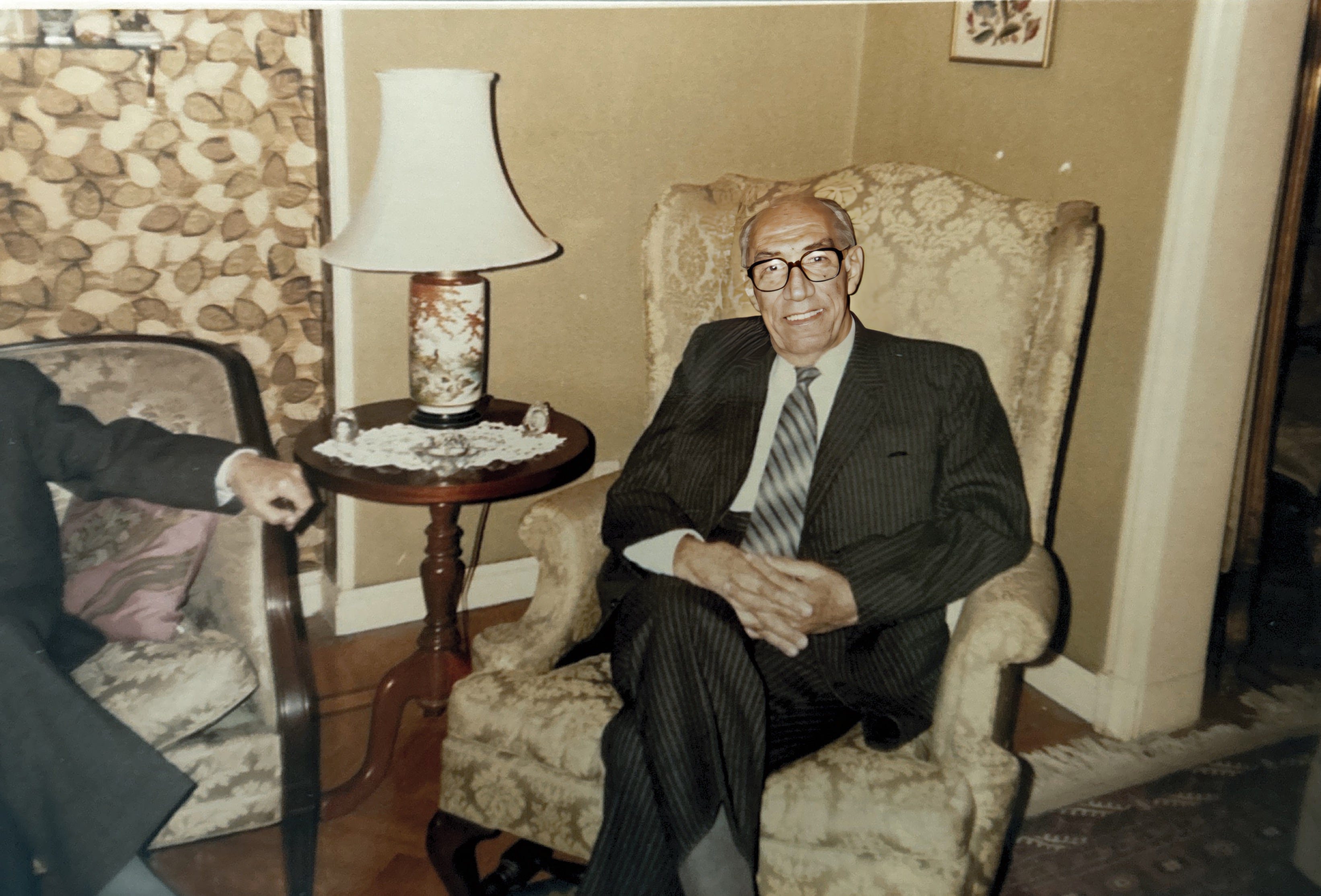
To those who knew him or know of him, his work and legacy, he is remembered as a respected and principled gentleman, a diplomat who navigated complexity with integrity, experience, and insight. I was fortunate to know many of his colleagues and had the utmost pleasure of working with some of them. Life is a journey, and people come and go, leaving behind the marks they make, the legacies they imprint, and the impact they have on their organization and community.
His guidance and advice on life, education, work, relationships, friends, and family, to mention a few, were invaluable, yet he offered them over the years from a distance, without imposing, enforcing, or interfering in any of my decisions. He mastered that balance. He blended his intellectual, diplomatic, and social intelligence, along with a touch of humor, to share his views in a smooth, friendly, and objective way. Many of those lessons I learned by listening to him and observing how he reacted. I truly miss those moments.
As noted earlier, I wanted, one way or another, to follow in my father’s footsteps. So, I applied in April 1987 to join the ILO. I asked my father to write me a letter of support, which he did. He received a reply stating that the request would be considered when an opportunity presented itself. Meanwhile, in early 1989, I was offered the opportunity to study for my doctorate at the London School of Economics (LSE). I applied but never heard back. Interestingly, in the early summer of 1991, I received an acceptance letter from LSE, and in the same week, a job offer from the ILO in Geneva. The irony of the two letters arriving in the same week posed a major challenge: decide between the job opportunity I had planned and applied for four years earlier and the study opportunity that had just presented itself after more than two years of waiting.
I drove for three hours from Cairo to Alexandria to meet my father, who was spending some time there, to discuss the issue with him. I was young, a few months shy of 26; I really needed help. All the way, I kept weighing the options. Deep inside, I was leaning toward the UN offer. When I saw my father and began explaining the two options, it suddenly hit me that he had not had the chance to complete his doctoral degree, and I thought maybe he would be satisfied to see me do it. All hesitation vanished, and I told him I had decided to pursue a doctoral degree. I could see his eyes light up. He paused for a few seconds, then said: “It is the right choice. You will get other chances to join the UN in the future, but studying for your doctoral degree, if you were entertaining the idea of an academic career, was an opportunity not to miss, especially at one of the top universities in the world.” The rest is history. During the viva exam, even at the age of 81, he insisted on traveling to London, even though he could not attend it. He just wanted to be close and supportive in his own way.
In 2005, I was selected as an Eisenhower Fellow from Egypt, a huge honor and privilege, and, on a personal note, ironic. In my mind, it somehow linked me to my father. This was 53 years after he received his master’s degree from Columbia University, when Dwight D. Eisenhower was President. Life is often full of interesting parallels. I was proud and delighted to be an Eisenhower Fellow for what the fellowship represents and for the friends I made through its invaluable global network. But more importantly, at the personal level, I was utterly thrilled and pleased that it created another opportunity to share something special with my father, even remotely.
As avid football fans, we never missed a single game of either Al-Ahly Football Club or Egypt’s national football team. We always watched the games together and passionately cheered from start to finish. He was awesome company; I never wanted to miss a game. While he was a member of Al-Ahly in his youth, Egypt’s Red Devils soccer team, I was never a member. However, our passion and support were unbelievable, and for 38 years, from 1973 until 2011, we watched almost every game together, week in, week out. He always used to tell me, “We have to watch the game together so we can win.”
I understand that every father shares a special relationship with his son or daughter. In my mind, my relationship with my father stood above all others. Given the age difference, I cannot claim that he played with me when I was little, but I can confidently say that he made every effort despite his work commitments, a busy schedule, and regular travel; he always made time for his family.
Many years after his passing, the contours of his influence still shape my life. I find echoes of his voice in my reading habits, his steadiness and commitment in my approach to work, and, hopefully, his kindness and thoughtfulness in my interactions, as well as in the global curiosity and openness he instilled in me. There has not been a day since he passed that I have not thought of him, sometimes for a minute, sometimes longer; he is always there. Today, at 60, I miss my father, his presence, company, humor, mentoring, and invaluable advice. I feel he is out there watching, smiling, and encouraging as always.
It took me a long time, and it was not easy to write this article. I dedicate this edition of the NileView to him. It is a very modest way of remembering my father, a true gentleman and a class act diplomat from a different time.
My father has been and will always remain my role model, inspiration, and driving force in so many ways. His guidance, wisdom, and support have been both influential and invaluable to me throughout my life and through the various stages of my career. As I am closing in on the final chapter of my career, I will always remain indebted to him for everything I have accomplished. He passed to a different world 15 years ago today—he was 97, الله يرحمك يا ابويا.
About the author: Sherif Kamel is a Professor of Management and Dean of the Onsi Sawiris School of Business at The American University in Cairo.
1 March 2026
Issue #62
I read it twice, and it might be the most beautiful thing I’ve read this year. May God have mercy on him and bless his memory.
اعجابي باختياركم للكلمات ولكن شعوري بأن شئ لم يذكر أظن أنه الجزء المؤلم والاكثر تأثير علي تركيب شخصيتنا .