
The NileView
A Renaissance Man: Celebrating the Legacy of an Egyptian Intellectual

We live in an age of unprecedented information abundance. A curious mind can summon the biography of an economist, the filmography of an actor, the story of a politician, or the complete published works of a contemporary novelist in seconds. This is the privilege of our time: the democratization of information has made what was once the domain of specialized libraries and archivists available to anyone through thousands of digital platforms. However, turn the clock back, and the landscape changes entirely. For those who lived through the 20th century—particularly its earlier decades—the record is far thinner and more fragmented.
Role models light the path forward, and nowhere is that light warmer than within our families. Long before we meet mentors or admire public figures, our family members are the first to teach us. One need only be a good observer and listener to learn. Watching a family member demonstrate discipline, ambition, achievement, or enduring grace gives us a living blueprint for who we might become. As we grow, we widen our circle to include teachers, mentors, and inspiring figures beyond home, yet the family’s example often remains our truest compass, helping shape our values. In this way, family becomes not just where we come from, but the first and most enduring learning space for becoming someone we can emulate. I have said it time and again: family comes first.
For these two reasons, I dedicate this edition of the NileView to my eldest uncle, Mahmoud Kamel (1906-1993) – also known as Mahmoud Kamel Al-Mohami (The Lawyer – المحامي). Today marks what would have been his 120th birthday. He was born on Sunday, July 8, 1906, in the city of Zagazig in the Governorate of Sharqia, about 85 kilometers northeast of Cairo.
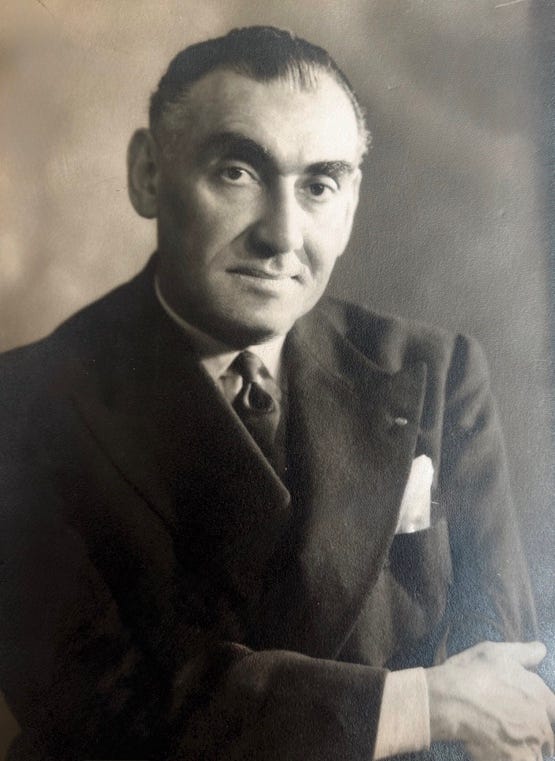
He was a man of many talents. He was a lawyer, politician, poet, novelist, playwright, publisher, Rotarian, a world traveler, and a renowned tourism expert. He built a career spanning law, literature, and tourism, practicing law, writing books, publishing short stories, staging plays at Cairo’s most storied theaters, and founding weekly magazines that served as primary vehicles for publishing his plays, stories, articles, essays, and dramatic works, which in many ways shaped intellectual life in Egypt and the Arab region for nearly 60 years. He distinguished himself by bridging his professional life with his literary pursuits and ambitions.
His work is better known and more familiar to those who lived through the 20th century. He is known for bridging the worlds of law and literature during a pivotal century in Egyptian history. However, writing his story today requires sifting through scattered library catalog entries, brief institutional notes, personal letters, the preserved family archive, and the rich collection of articles, magazines, and books he left to his family.
Kamel completed his baccalaureate in 1924. He then moved to Cairo to enroll in Madrasat al-Huquq (School of Law) at the Egyptian University (today’s Cairo University), graduating in 1928. His love of writing and literature began at a very young age. While studying law, he regularly contributed to several political newspapers, such as Politics (السياسة), and to literary magazines such as Al-Muqtataf (المقتطف), writing about politics, culture, and the arts.
Sometimes genes and habits pass from one generation to the next. On this note, my grandfather, Mohamed Ali Kamel Bey, was a lawyer, an educator, and a writer who believed that sharing knowledge transforms society. In 1896, while practicing law, he established a bookstore and ran a publishing house that published influential works, including Qasim Amin’s “Liberation of Women – تحرير المرأة.” After graduating from law school, Kamel followed in his father’s footsteps, practicing law, establishing a publishing house, and gradually becoming a prolific writer who made invaluable contributions to Egyptian and Arab literary history.
After graduation, Kamel worked in various government offices in the Governorate of Al-Gharbia. He never felt this work would help him realize his ambitions, which, from the outset, were clearly to be something more than a lawyer. He resigned and returned to Cairo in 1930. He decided to pursue law and journalism, engage in literary work, and play a more influential role in society through a cultural lens.
Alongside his professional career as a practicing lawyer at his office on 45 Kasr El-Nil Street, which I visited several times over the years, Kamel built a substantial body of literary work, including hundreds of short stories, 10 plays, and numerous books on Egypt, law, politics, theater, history, and tourism. As a novelist, playwright, editor, and publisher, he produced fiction, dramatic criticism, and plays. He spoke French, English, and Arabic, which gave him a unique key to global citizenship, opening doors to deeper understanding, reading, and writing across diverse cultures and literatures.
He began his literary career early, translating a collection of Robin Hood poems into Arabic in 1923 while still a teenager. While in high school, he wrote articles for the newspapers Al-Muqattam (المقطم), Al-Sabah (الصباح), and Abou El-Hol (أبو الهول–The Sphinx). Over time, he wrote a regular column. These newspapers focused on Egypt, politics, the economy, culture, and literature. His original works were published in 1932 in a book that included his first short-story collection, Al-Mutamarridun (The Rebels-المتمردون), as well as a critical book, Al-Masrah Al-Jadid (The New Theater-المسرح الجديد).
Kamel was a key figure in the Egyptian theater scene. In the late 1920s, 1930s, and 1940s, his plays were staged by prominent contemporary troupes. He believed that plays could be an effective vehicle for conveying social and political messages. In 1926, he wrote Al-Wuhush (The Beasts-الوحوش), one of his early plays, for which he received 40 Egyptian pounds, equivalent to $194, a substantial sum for a student in his second year at the university. It was staged by the legendary actor and playwright Youssef Wahbi Bey (1898-1982), also known as the Dean of Arabic Theater, and by Zainab Sedky, a stage and film actress remembered as one of the early 20th-century aristocratic figures in theater and cinema. It was directed by Aziz Eid, a theater director, actor, and theorist, regarded as one of the pioneers of Egyptian theater. Al-Wuhush premiered on Monday, December 6, 1926, at Ramses Theater on Emad Eldin Street. Another play, Fatima, a four-act drama, was performed by the troupe of pioneering actress, singer, film director, and producer often called the Queen of Theaters, Fatima Rushdi (1908-1996), at the Azbakeya Theater on Monday, November 30, 1931.
In the 1930s, he established Al-Jamia publishing house. He published two weekly magazines: the first was Al-Jamia (The Community), which circulated from 1932 to 1939. The Arabic word Al-Jamia (الجامعة) carries a rich set of meanings, making it a popular title for periodicals across the Arab world in the early 20th century. It can refer to the community, the assembly, or the gathering of minds, reflecting themes of unity and collective purpose he believed in throughout his life, as well as the magazine’s aspiration to address Egyptian public life in its fullness across all domains. This linguistic versatility is why multiple unrelated publications across Egypt and the broader region adopted the name during this era.
The 8-year run of the magazine, preserved in Kamel’s personal collection for more than half a century and now honored to be part of my library, offers a rare and largely unexamined window into the texture of Egyptian society, public opinion, and cultural life during the interwar period. Primary sources from the 1930s and 1940s Egyptian press are unevenly preserved, and the survival of what my family describes as “a rare sequel covering the society in Egypt in the early 20th century” – from the personal archive of its creator – is a remarkable preservation story.
Al-Jamia magazine was among the most innovative literary magazines of its time, encouraging young writers to experiment with modern literary forms and keeping them up to date with a wide range of translated Western literature in both prose and poetry. For researchers in Egyptian history, journalism, political thought, social and cultural history, and Arabic literature, Al-Jamia collection is a rare primary source for one of the most formative decades in Egypt’s modern history.
Kamel, who served as founder, editor-in-chief, and publisher, shaped the magazine into a broad-based forum for informed public discourse, covering a wide range of topics, including political and economic affairs in Egypt, social commentary, global affairs, literature, the arts, sports, and international news. In its comprehensiveness and the independence implied by its individual founding, Al-Jamia exemplified the spirit of Egypt’s liberal press: plural, engaged, and oriented toward an educated reading public at a moment of rapid intellectual and political change during the 1930s, a period among the most consequential and turbulent decades in modern Egyptian and world history.
Following Egypt’s Prime Minister Ismail Sidqi Pasha’s suspension of the 1923 Constitution on Wednesday, October 22, 1930, and the tightening of press controls, Al-Jamia navigated a politically charged environment in which Egyptian journalism was both vibrant and constrained. Throughout these years, Egypt’s weekly and monthly press served as the primary arena for public intellectual life, and Al-Jamia was an active participant in that conversation. The magazine ceased publication in 1939, the year the Second World War began, when Egypt was once again subjected to wartime press restrictions.
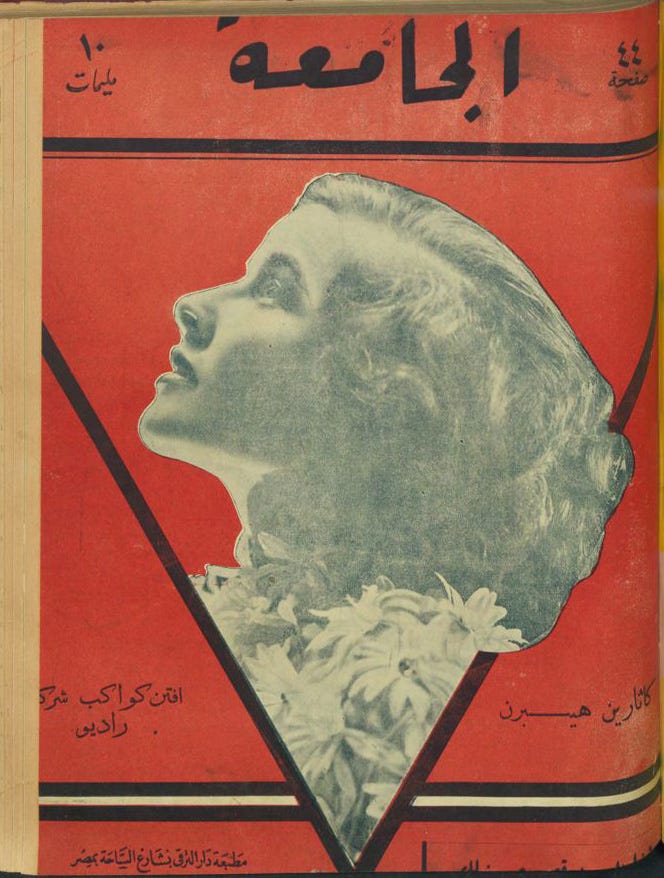
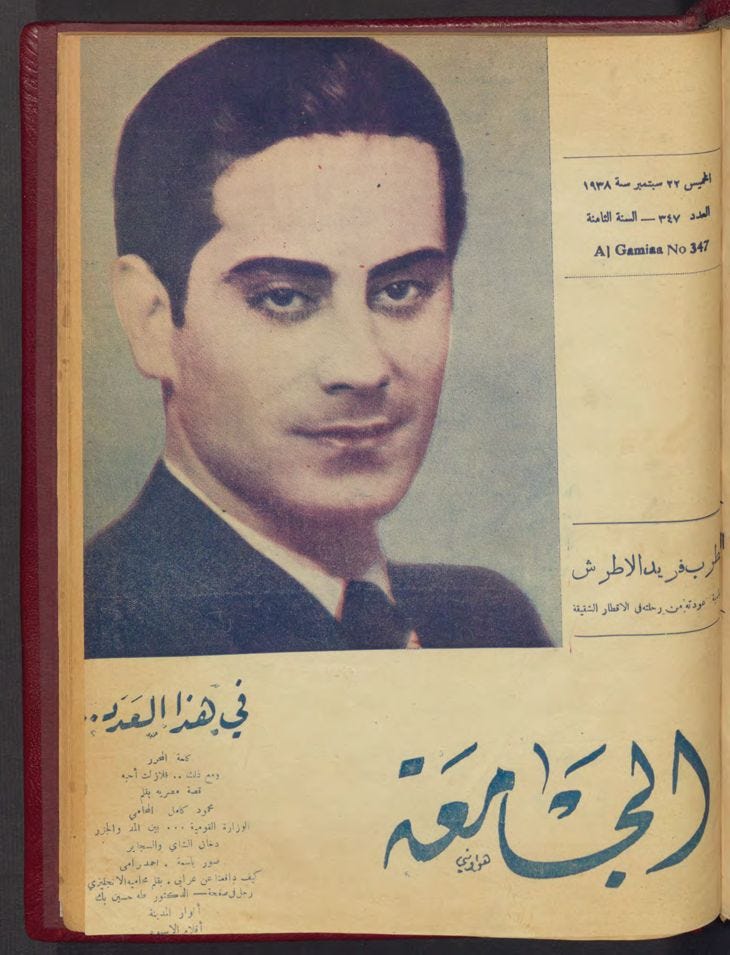
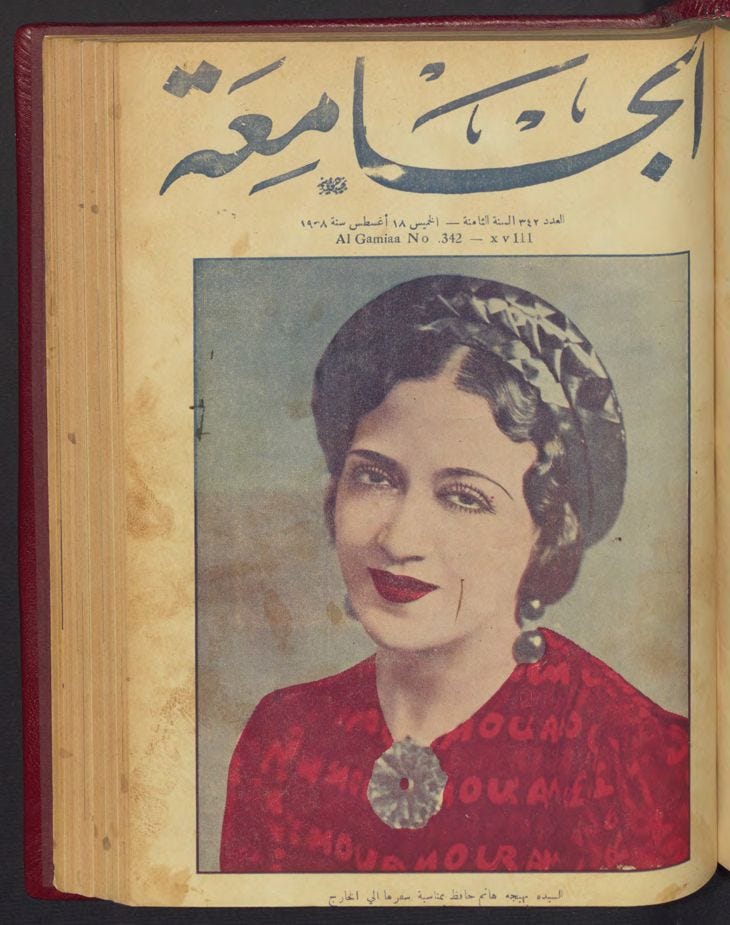
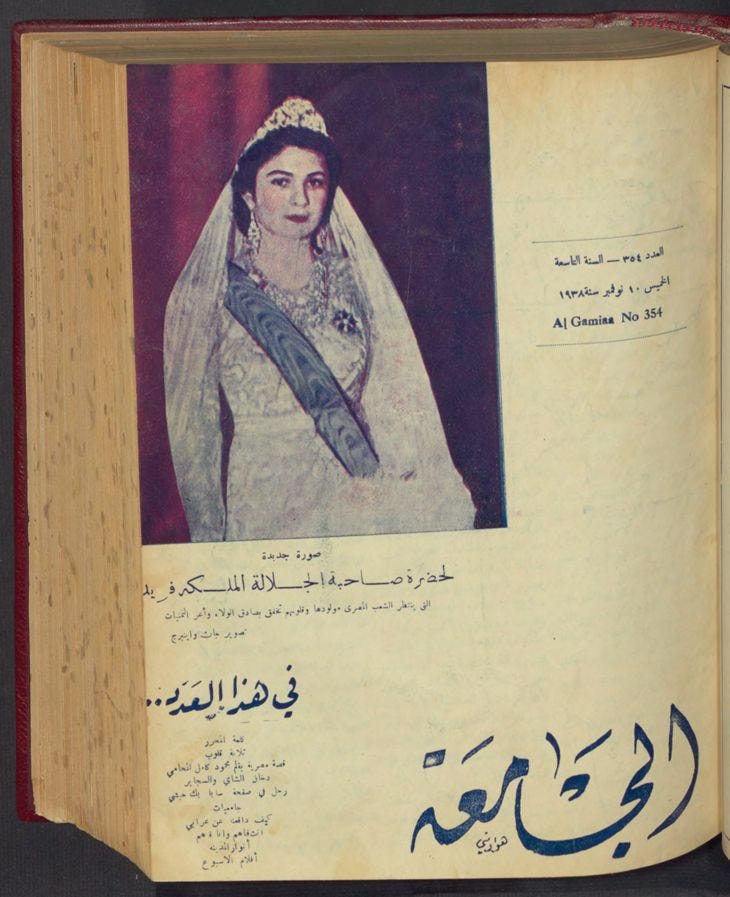
The second magazine Kamel published was Al-Qadaa Al-Masri (Egyptian Justice–القضاء المصري), which was published every Saturday from 1932 to 1946. In addition, he published the magazines Al-Ashar Kissas (The Ten Stories–العشر قصص) in 1936 and Al-Eshrin Kissa (The Twenty Stories–العشرين قصه) from 1937 to 1945. Moreover, he established a journalism school for young writers and conducted literary competitions to encourage what he called Al-Adab Al-Gadid (The New Literature–الأدب الجديد). Kamel drew directly on his courtroom experience in his writing.
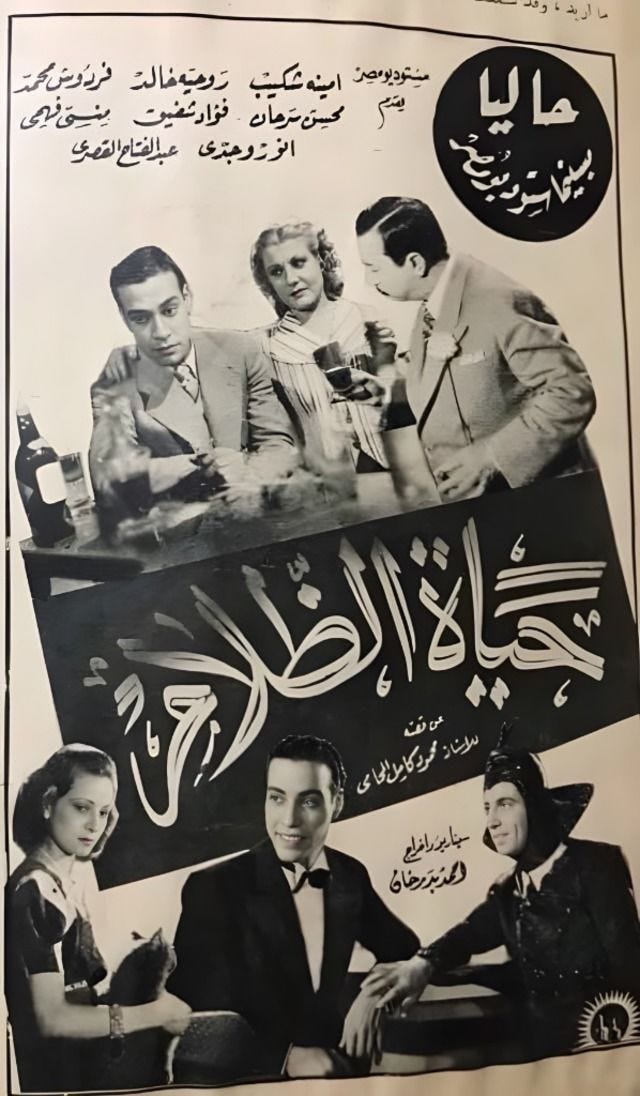
In 1936, he celebrated his 30th birthday with creative output, publishing his novel Hayat Al-Zalam (The Life of Darkness– حياه الظلام), a short-story collection that was later adapted into a film in 1940, directed by Ahmed Badrakhan, one of the early pioneers who helped establish Egyptian cinema in the 1930s, and featuring Mohsen Sarhan and Mimi Shakib.
In 1938, he attempted to enter politics and, in the pages of Al-Jamia, called for the formation of a political party, All for the Nation (الكل للوطن), rallying Egyptians to demand judicial, administrative, and economic reform. Through his writings, his rhetoric grew sharper, attacking the British occupation and the elderly Egyptian prime ministers who failed to introduce reform, while urging younger politicians to take the lead.
Kamel used Al-Jamia as a platform to argue that the Civil Code should address several issues, including regulating foreigners’ ownership of property in Egypt, regulating immigration to Egypt, protecting Egyptian laborers from migrant workers and craftsmen, and distributing about one and a half million feddans of uncultivated government agricultural land suitable for agrarian reform to small farmers owning less than one feddan. In addition, he demanded compulsory insurance for agricultural workers against workplace injuries, endemic diseases, and unemployment.
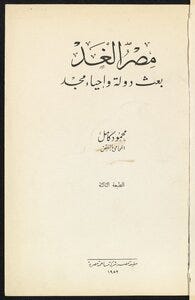
His political party never gained traction, perhaps because he was young, inexperienced, and lacked political leverage or support. Fearing that his principles might be lost, he compiled them into a book, Egypt Tomorrow Under the Rule of Youth (مصر الغد تحت حكم الشباب), which he published in 1939 and later reprinted with revisions and additions under the title Egypt Tomorrow: The Revival of a State and the Restoration of Glory (مصر الغد - بعث دولة وإحياء مجد).
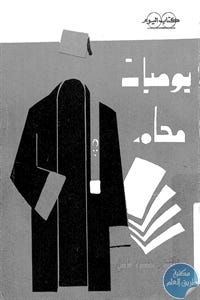
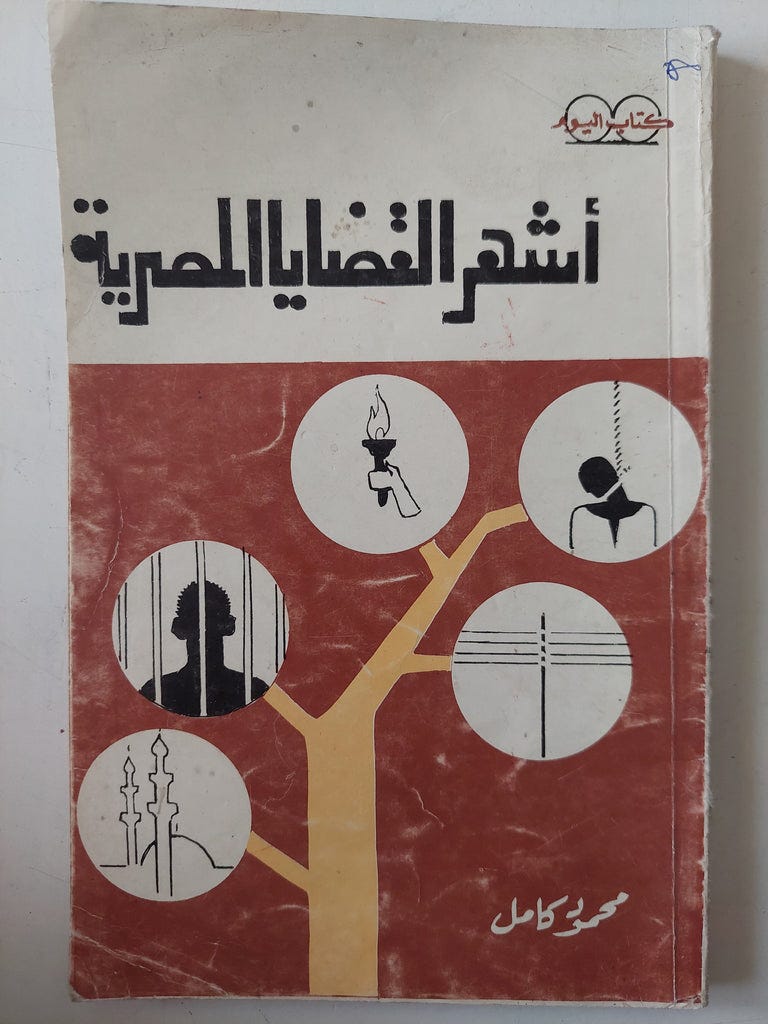
His legal background formed the foundation of his best-known book, Diary of an Egyptian Lawyer – يوميات محامي مصري –The Human Side of a Court of Law, published in 1944. The book explored the human condition through the lens of courtroom experiences. It focused on the personal and human dimensions of legal practice rather than purely technical matters, blending his professional insight with a novelist’s sensibility. In 1944, he also published another book, The Most Famous Egyptian Cases (اشهر القضايا المصرية).
From the post-World War II era through nearly 40 years, he traveled extensively around the world, representing many institutions in Egypt across global circles and speaking at various venues, including the United States Bar Association, the International Bar Association, the United Nations, the International Rotary Club, and the Società Geografica Italiana (Italian Geographic Society), among others. He was a member of numerous international associations, including the Special Committee on the United Nations Charter, which operates under the International Law Association in London, UK.
In 1952, he published a book titled Egypt outside Egypt (مصر في خارج مصر), which emphasized the importance of collaboration and understanding among cultures and nations.
For many decades, Kamel was a committed Rotarian, rising to the position of governor of District 195 during the year 1961–1962.
Kamel’s career intersected with the international tourism movement at a formative time. He worked as a tourism and publicity expert in Egypt’s Ministry of Finance and Economy, then expanded into global tourism networks and was a member of several international tourism associations. He became a member of the International Association of Scientific Tourism Experts in Bern. The World Tourism Organization, now the United Nations’ official agency for tourism, was formally established in 1975. Kamel’s activities in the late 1940s, 1950s, and 1960s predated the creation of the World Tourism Organization (UN Tourism), but they were part of the same international push to professionalize tourism as a global industry. His involvement with United Nations-linked committees and international associations shows he was already working within the ecosystem of institutions that culminated in the founding of the World Tourism Organization decades later and would inform its mandate. He represented Egypt in Europe and the United States, and at United Nations-related forums, and was perceived as a pioneering Egyptian voice in shaping tourism as a tool of cultural diplomacy and international cooperation. Kamel traveled the world as a tourism expert, promoting the importance of tourism in bridging cultures and fostering international relations.
In his sixties, he started and completed his postgraduate studies and was awarded his doctoral degree. I am mentioning all this because there is no limit, time, or age at which one should stop learning; it is a way of life one chooses to pursue. He decided to pursue his PhD, went for it, and earned his doctoral degree from the Faculté de Droit d’Aix-en-Provence (Faculty of Law of Aix-en-Provence) in France. The subject of the dissertation was Arabism as a Political and Social Basis for Unity in Arab International Relations. It was written in French. He was 67.
As my family marks 120 years since my uncle’s birth, the challenge is not only to celebrate his life but to reconstruct it: to gather the fragments that survived analog record-keeping and give them new visibility in a digital age his own generation could scarcely have imagined. This is not a gap in his significance but in how his era was documented. Kamel lived before the internet reshaped how we remember people. His generation’s achievements exist in yellowed newspaper supplements, out-of-print books, and theater programs rather than in searchable databases.
Kamel is remembered for blending legal practice with literary creativity and for helping shape Egypt’s intellectual life in the 20th century. His legacy lies in his creative writings, pioneering plays, and editorial ventures. He bridged the worlds of law and literature, using both to advance social, political, and cultural debates. He was a cultural innovator; through magazines and plays, he created platforms for intellectual exchange. He was a voice of modernity; his works reflected themes of rebellion, social change, and the search for new forms of theater and storytelling.
Kamel was an integral part of Egypt’s literary renaissance; alongside contemporaries, he contributed to the flourishing of Arabic literature and theater, especially in the early 20th century. Finally, and more importantly to me, he was my uncle, a role model for his intellectual curiosity, writing abilities, learning ambitions, diverse interests, cultural exposure, and travel experiences. I had the privilege of traveling with my uncle many times when I was little, a unique opportunity to learn firsthand from an intellect who, over his lifetime, pursued diverse interests yet managed to excel and leave an enduring impact.
In 2017, on behalf of the entire family of Mohamed Ali Kamel Bey, I was delighted to donate the digital version of the Al-Jamia magazine series from the personal collection of its founder, Dr. Mahmoud Kamel, to the Rare Books and Special Collections Library at The American University in Cairo, where it belongs and where scholars and readers can access hundreds of thousands of pages documenting developments in Egyptian society during the 1930s. I am grateful to the university for inviting me in on Tuesday, November 7, 2023, to share the story of the origins and History of Al-Jamia magazine and the legacy of Dr Mahmoud Kamel as part of an Archiving Family Heritage Workshop.
This act of family philanthropy reflects a deep commitment to Egypt’s documentary heritage and to preserving primary sources that illuminate the country’s modern history for future generations of scholars and researchers.
About the author: Sherif Kamel, Professor of Management and Dean of the Onsi Sawiris School of Business at The American University in Cairo.
8 July 2026
Issue #68