
The NileView
Farewell to The Alexandria Tram: The Value of Preserving the Historic Fabrics of Our Cities

I have always been fascinated by history and passionate about exploring the stories of old cities, ancient cultures, transformative events, and the individuals who shaped our world. History is a living bridge spanning civilizations and generations. Every monument, building, street, and tradition echoes humanity’s collective journey, reminding us of where we came from and inspiring us toward where we are headed.
Is it possible that my love for history is built in, as an Egyptian from a country with one of the world’s oldest civilizations? Maybe, but one thing is for sure: my admiration for history is deeply tied to my firm belief in the importance of preserving it respectfully and carefully. History is precious, and each country’s heritage is part of its national wealth. Therefore, preserving cultural heritage and historical sites is not just about protecting the past. When history is neglected, societies risk losing part of their soul and cultural consciousness. History teaches humility, resilience, creativity, and perspective. It helps us appreciate diversity, understand the rise and fall of civilizations, and recognize the enduring values that have connected humanity across centuries. History is not static—it is alive, meaningful, and essential to the future of our world. Therefore, preserving every bit of it is a collective responsibility.
Cities are more than clusters of buildings and networks of roads; they are living organisms shaped by centuries of human experience, stories, developments, triumphs, and failures. Their old quarters — the vintage houses and palaces, facades of old buildings, cobblestone streets, statues, trams, and monuments, to name a few — form the physical memory of civilization, serve as a visual image of the past, and are integral to humanity’s world heritage.
Each city has elements that are more than mere aesthetic relics; they are repositories of identity, wisdom, and continuity. Let us be clear that preserving these elements is not an act of nostalgia but a strategic, cultural, and economic investment. In a world increasingly dominated by uniform skylines and look-alike modern architecture, the historic fabric of cities stands as a powerful testament to their history and a vital anchor for communities seeking to understand their past and define their future.
These elements lend cities a distinctive character and help tell their stories. A centuries-old house, with its weathered wooden beams and hand-carved balconies, tells the story of the families who lived there, the artisans who built it, and the social customs that shaped its design. A monument in a public square is not merely a sculpture; it is a symbol of collective memory, commemorating victories, tragedies, or cultural milestones. Every piece of history is significant and should be carefully preserved–nothing should be taken for granted.
Moreover, tourism is another strong reason to preserve these historic elements. Travelers are increasingly motivated by cultural curiosity. They want to explore places that offer a sense of uniqueness and depth. Modern buildings, no matter how impressive, rarely provide that. But a centuries-old cathedral, mosque, or synagogue, a historic tram line, a city wall, vintage stairs, or a preserved fortress wall is irreplaceable. These elements become the defining images of a city, the postcards, the memories, the stories shared across generations. In other words, for countries that are keenly pushing, rightly so, on all cylinders to transform their tourism industry, such as Egypt, the preservation of its unique and massive historical elements that span more than five millennia, including a wide range from the past five centuries, is far more valuable than simply adding more modern hotel rooms and resorts, restaurants, cafés, and shopping malls. While the former are unique to one of the world’s oldest civilizations, from ancient times to the present, and can never be replicated, the latter are easy to build and simply require investments and modern-day infrastructure that are found in just about every corner of the globe–nothing special about that.
The historical connotations embedded in these elements are invaluable. They offer insights into architectural evolution, political history, economic transformation, societal development, and cultural identity. A Medieval gate, a Renaissance palace, or an Ottoman-era market is a tangible chapter in human history. This is why tourists flock to places like Prague’s Old Town, Cairo’s Fatimid Quarter, Lisbon’s Alfama District, Geneva’s Vieille Ville, Budapest’s Castle District, Tallinn’s Medieval Center, and Stockholm’s Gamla Stan. Not all tourists seek modernity; many are looking for authenticity and the chance to feel history beneath their feet.
Cities that invest in preserving their historic elements reap significant economic benefits. Heritage tourism is among the most profitable sectors of global travel, generating billions of dollars annually. Visitors spend money not only on admission to historic sites but also on vintage hotels, restaurants, local craft shops, and unique cultural and historical experiences. A well‑preserved old town becomes a self‑sustaining economic engine. The charm of its narrow streets and historic façades attracts visitors year‑round, creating jobs and supporting local businesses and artists. In contrast, cities that neglect their heritage often struggle to differentiate themselves in an increasingly competitive global tourism market–the value proposition becomes more common than distinctive.
Preservation, however, is not simply about maintaining old buildings; it is about preserving the integrity of the urban narrative and the ecosystem. When historic houses are replaced with modern structures, when old trams are retired in favor of generic buses or modern trains, or when historic buildings and statues are removed to make way for new developments, such as widening streets or constructing bridges, the city loses fragments of its identity, and the continuity between past and present is broken. This is why cities and municipalities must adopt strong preservation policies. These policies should include strict regulations on demolition, incentives for restoration, and comprehensive, well-thought-out urban planning that integrates cultural heritage into modern life rather than removing it. Once issued and approved, these policies should be respected and honored, with repercussions for noncompliance.
Restoration is often more expensive, but the long-term value and prospects far outweigh the cost. A restored building retains its authenticity, and when repurposed, for example, as a museum, it is often an effective approach and precisely what locals and tourists want to see. Many countries have successfully revived entire districts through similar initiatives, transforming old quarters and historic places into vibrant cultural and economic hubs. These countries, through collaboration among their governments, private sector, and civil society, understand and respect their cultures and histories.
Preservation should not be limited to buildings. The intangible elements–traditional street layouts, historic transportation systems, public squares, and even the atmosphere of old neighborhoods–must also be protected. The charm of a vintage tram, for example, lies not only in the vehicle itself but also in the experience it evokes, including its slow pace, wooden interiors, and old-fashioned design, which modern systems cannot replicate. Similarly, statues and monuments serve as visual anchors in the urban landscape, reminding residents and visitors of the stories that shaped the city.
Preserving vintage elements strengthens community identity. Residents of cities with historic districts often feel a deep sense of pride, belonging, and cultural awareness. Children also develop a natural connection to their past and come to understand that they are part of the city’s long story. This sense of rootedness is essential in a rapidly changing world, where many people feel disconnected from tradition–a way to stay connected to one’s roots.
Moreover, preservation is an ethical responsibility. Future generations deserve the opportunity to experience the beauty and wisdom of the past. Destroying historic structures for short-term convenience is a form of cultural impoverishment, negligence, and utter ignorance of the cultural significance of the relatively few remaining elements of the past. Once a historic building or an element such as a statue, a tram, a garden, or a street dating back hundreds of years is demolished, it is gone forever. No reconstruction, no matter how accurate, can replace the authenticity of the original. Cities must therefore adopt a long-term perspective, recognizing that heritage is not a burden but a gift and a responsibility–one that must be protected with care and foresight.
One of the defining features of old cities is trams rattling through narrow streets, serving as a moving museum that connects present-day residents and visitors with the rhythms of earlier generations. These elements collectively form a city’s soul — vibes that cannot be replicated once lost. Cities fortunate to have trams are like open-air museums and a breath of fresh air in a world increasingly populated by cities that look the same.
History of Trams
The tram is more than a means of transportation. It played a major role in transforming cities by enabling urban expansion, supporting industrialization, and reducing travel time. Before the tram, many people had limited mobility within cities. The tram democratized movement by providing affordable transportation for workers, students, and families, and it created shared public spaces where people from different backgrounds traveled together. These spaces became places of conversation and social exchange. Architecturally and aesthetically, trams added beauty to cities. Their movement through streets, ringing bells, and integration with urban landscapes created a visual and emotional relationship between transportation and city life.
For more than two centuries, trams have carried millions of people through the streets of cities around the world, becoming deeply connected with the rhythm and identity of urban life. From the early horse-drawn tramcars and carriages of the 19th century, which ran along iron rails set in city streets to reduce friction, trams quickly became more popular because they were more efficient than ordinary carriages on rough roads.
The first known tram system in the world was the Swansea and Mumbles Railway in Wales, which opened in 1807. Later, trams began operating in cities such as New York (1832), Paris (1855), and London (1860). The oldest continuously operating street railway is the St. Charles Streetcar Line in New Orleans, which has operated since 1835. Trams were an affordable and reliable form of public transportation for the growing industrial cities of Europe and North America.
A major transformation occurred in the late 19th century with the invention of the elegant electric tram systems that glide through cities today. In 1881, German engineer Werner von Siemens introduced one of the world’s first electric tram systems in Berlin. Electricity revolutionized urban transportation, making trams faster, cleaner, more efficient, and more reliable. Cities rapidly adopted electric trams, and by the early 20th century, they had become the backbone of public transportation. The tram has survived wars, industrial revolutions, technological changes, and the rise of cars. Despite these transformations, people continue to love trams not only for their practicality but also for their charm, nostalgia, and unique relationship with the city. They are a culturally rich form of urban transport—machines that shaped cities’ planning, encouraged linear growth along tram corridors, connected people, and became icons of place and memory.
Europe: Home of Trams
By the late 19th and early 20th centuries, Europe was home to the oldest and most extensive tram networks in the world. Cities such as Geneva (1862), The Hague (1864), Vienna and Berlin (1865), Budapest (1866), Brussels (1869), Lisbon (1873), Prague and Amsterdam (1875), Milan (1876), and Stockholm (1877) integrated trams into their urban identity, relying on them as clean, efficient modes of transport. Trams give a city a distinct vibe; they are part of its soul. Trams were more than mere transportation; they shaped city planning and urban growth. Entire neighborhoods developed around tram lines, allowing workers and middle-class families to live farther from crowded city centers while still commuting easily. Trams connected people to schools, factories, ports, parks, and cultural institutions. In Europe, trams blend heritage and modernity—old vehicles running alongside sleek new ones. They are environmentally friendly, central to sustainable mobility, and visually iconic, often featured in art, cinema, and tourism.
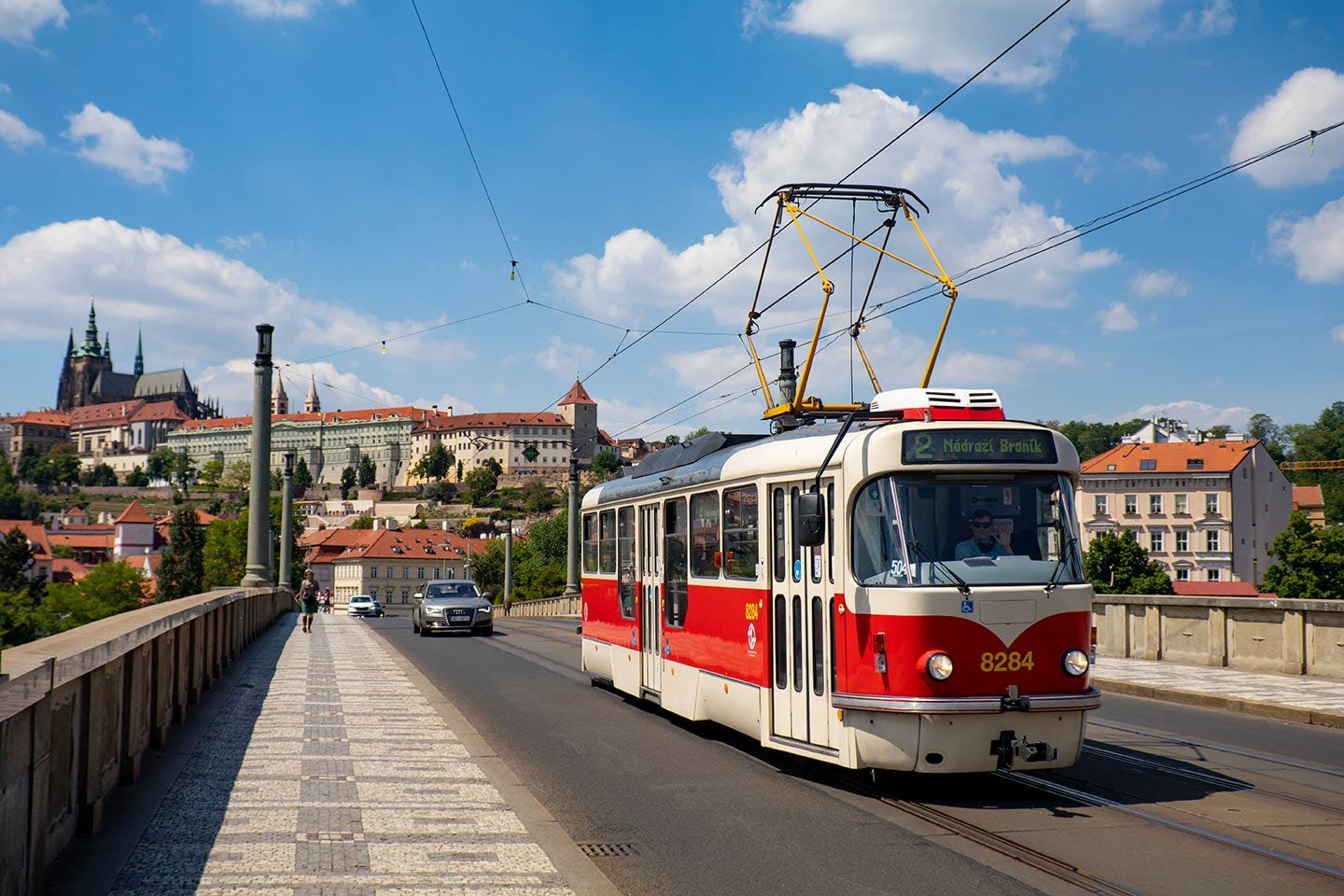
European trams became symbols of elegance and urban beauty. Unlike underground metro systems, trams let passengers see the city as they travel along streets, riverbanks, and through public squares. Over the years, many European cities modernized rather than abandoning their tram systems. While some networks declined after World War II due to the rise of cars and buses, several cities preserved their trams for their environmental benefits and efficiency. Today, while Melbourne’s tram system may be the largest, Europe remains a global leader in tram transportation, blending historic heritage with modern technology. Cities such as Vienna and Prague have some of the oldest and most historically significant networks still in operation, and Lisbon’s famous yellow trams remain among the most photographed transportation systems in the world.
The Tram Goes to Egypt
Alexandria and Cairo in the 19th century reflected Egypt’s strategic importance and cosmopolitan urban culture. Later, several African cities, including Tunis, Casablanca, Algiers, and Johannesburg, introduced tram systems to improve transportation and facilitate trade. More recently, Rabat and Casablanca have revived tram transportation as part of modern, sustainable urban planning, developing tram systems that have become models for environmentally friendly transportation in Africa.
The Alexandria Tram: One of the Oldest in the World
The first tram in Alexandria was introduced during the rule of Said Pasha. Known as the Raml (blue) tram, it was the first in Africa and among the oldest tram systems in the world. Its founding license was issued in 1860, and it was inaugurated on January 8, 1863, with horse-drawn carriages. It later transitioned to electric trams in 1902. The Raml tram became a defining symbol of the city’s enduring urban identity. Over time, the tram became inseparable from Alexandria’s personality. The city, with its Mediterranean atmosphere, European-inspired architecture, sea breeze, and multicultural history, provided the perfect setting for tram transportation. The Raml (blue) tram is famous for its distinctive blue-and-cream cars, its double-decker cars–one of the few in the world, and its routes stretching 22 kilometers across 4 lines east of the city, running from Victoria to Raml station and, in some parts, along the Mediterranean coastline, connecting residential suburbs to the city center.
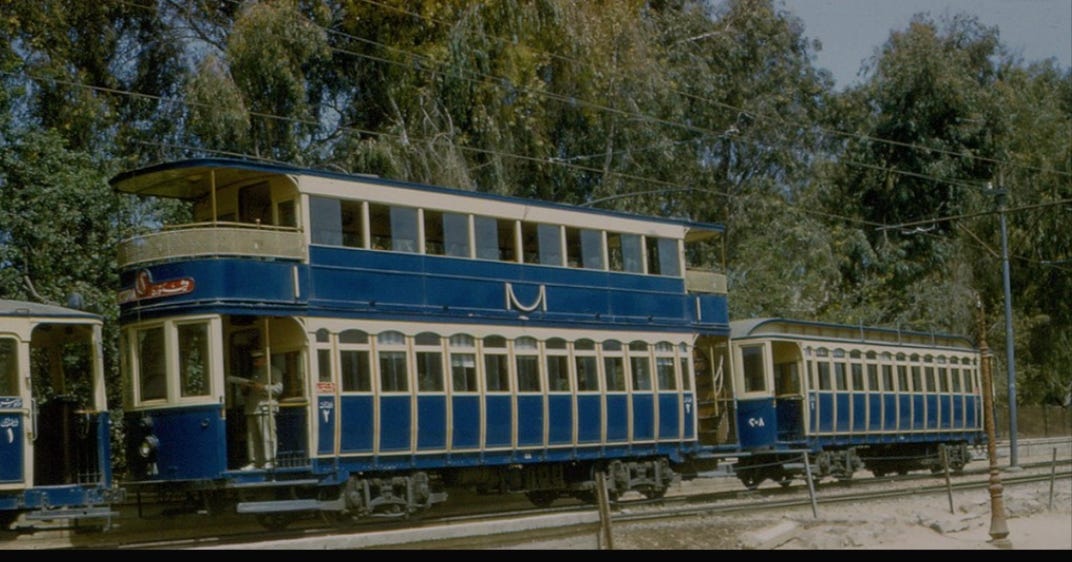
In 1897, Khedive Abbas Helmi II inaugurated the second Alexandria tram, known as the Medina “City” (Yellow) tram. It was known for its yellow and red cars. Its routes spanned 15 kilometers across 16 lines, connecting the city’s western and central districts to the historic quarters, linking to the Raml tram, and serving schools, universities, and markets.
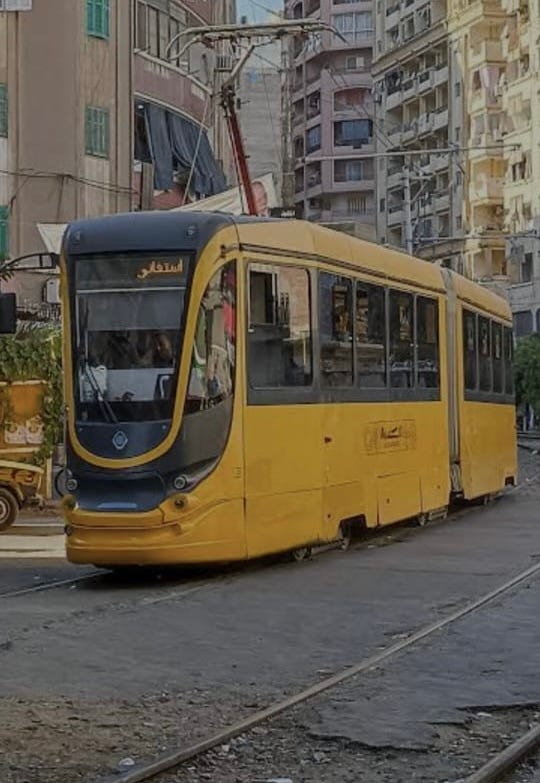
For generations of Alexandrians, the tram became associated with childhood memories, university years, family outings, and romantic stories. Writers, filmmakers, and artists often portrayed Alexandria’s tram as a symbol of beauty.
The tram contributed to Alexandria’s urban development by linking districts across the city and enabling social and economic mobility. It helped shape Alexandria into one of Africa’s most connected and modern cities in the early 20th century. Riding the tram in Alexandria is not simply a commute; it is a cultural experience in which passengers observe the sea, historic buildings, cafés, markets, and the city’s daily life. In its early days, the tram was a witness to Egypt’s belle époque.
Until recently, despite modernization challenges, years of unprecedentedly poor, ad hoc urban planning, and a lack of proper maintenance and renovations due to insufficient funding, among other reasons, the Alexandria tram remained one of the city’s most beloved landmarks.
Unfortunately, a few months ago, after 163 years of service, Alexandria’s tram was discontinued as part of a major renovation project and will be replaced by a modern light-rail system to improve speed and capacity. Many Alexandrians feel this is the loss of an integral part of the city’s heritage. In my view, the modernization efforts are important and should be appreciated, but they should never come at the expense of surrendering an integral part of the city’s identity. There are different ways to meet the city’s growing transportation needs, including modernizing the tram while preserving its look and feel, including the architecture of the stations–a path that many cities have pursued by updating and revitalizing many of their vintage elements without affecting their historical significance. These efforts require proper planning, detailed studies, and a thorough design and implementation plan, with the utmost respect for the historical significance of each element, since it does not belong to a specific city or a certain generation but is rather an integral part of the world’s historical heritage.
The Cairo Tram: Once A Giant, Now Mostly Gone
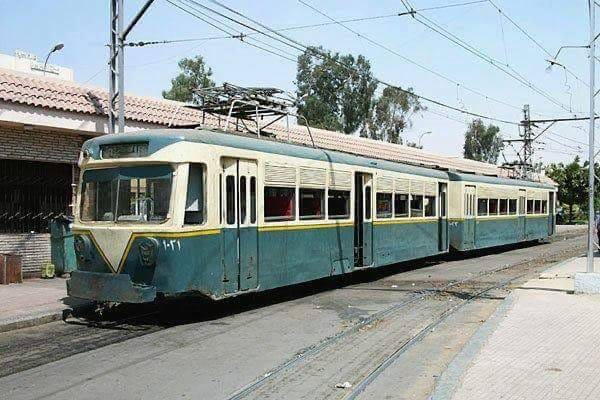
The Cairo tram began operating in 1896 and quickly became one of the primary means of transportation in the capital. Tram lines spread through neighborhoods, connecting downtown Cairo with districts such as Heliopolis, Shobra, Helwan, and Giza. It was known for its elegant green-and-yellow cars and distinctive Art Nouveau stations. At the time, Cairo had one of the largest tram networks in Africa. The tram became deeply woven into the daily lives of Egyptians for generations and was admired for its affordability and efficiency. It connected different social classes and gave ordinary citizens access to education, work, and recreation. For decades, the sound of tram bells and the sight of tramcars moving through Cairo’s streets represented the heartbeat of the city. However, over time, Cairo’s tram network gradually declined due to urban congestion, population growth, city expansion, shifting transportation policies toward buses, and a car-centric planning approach. Many of the tram lines were discontinued in the late 20th century, and by the early 21st century, all the Cairo tram lines had stopped. Today, the tram is remembered by older generations as another lost symbol of Cairo’s early elegance.
Conclusion
The tram is one of humanity’s most remarkable urban inventions. From the horse-drawn tramcars of 19th century Europe to the electric networks of modern cities, trams have shaped the growth and identity of urban life. In Europe, they became symbols of elegance and modernity. In Egypt, they reflected ambition, connectivity, and cosmopolitan development.
The Alexandria tram was a living memory of a city renowned for its history, beauty, and diversity, a city that became the very definition of cosmopolitanism. For generations, the tram has connected not only streets and neighborhoods but also memories and stories. Even in the 21st century, as cities search for sustainable transportation systems, the tram remains a timeless reminder that transportation can be practical while carrying history and culture through the heart of the city.
It is a true shame that both the Alexandria and Cairo trams no longer exist. Preserving vintage elements is essential to cultural identity, historical continuity, and economic vitality. Old houses, buildings, palaces, monuments, trams, statues, and streets–along with other elements–are the physical embodiment of human history. They attract tourists, enrich communities, and create an environment that modern architecture cannot replicate. Cities must therefore do whatever it takes to safeguard their heritage. By doing so, they not only honor their past but also invest in a future in which history remains alive, accessible, and deeply meaningful.
About the author: Sherif Kamel, Professor of Management and Dean of the Onsi Sawiris School of Business at The American University in Cairo.
9 June 2026
Issue #66
I really enjoyed reading this article. The way you connected the Alexandria tram to the broader story of a city's history and identity was both thoughtful and moving. While I understand the need for modern, more efficient transportation systems as cities grow, I also feel a sense of nostalgia for what the tram represented. It wasn't just a way to get from one place to another—it connected people, neighborhoods, memories, and generations. One of my strongest childhood memories is of the crowds leaving the stadium after Al-Ittihad's victory over Al-Ahly in the Egyptian Cup final. I was only 12 years old, but I can still vividly remember the trams packed beyond capacity—double and triple stacked with jubilant fans chanting, singing, and celebrating throughout the city. The joy, excitement, and sense of community from that day have stayed with me ever since. Moments like these remind us that the tram was more than transportation; it was part of Alexandria's collective memory and cultural fabric. Progress is important, and modernization is often necessary, but I hope we never lose sight of the value of preserving and documenting these pieces of our history. The challenge is finding a way to embrace the future while keeping a connection to the stories and experiences that made Alexandria the city we love.
You’ve masterfully demonstrated that authenticity is our truest competitive advantage, and that sustainable development must always honor the irreplaceable urban narratives of our past